

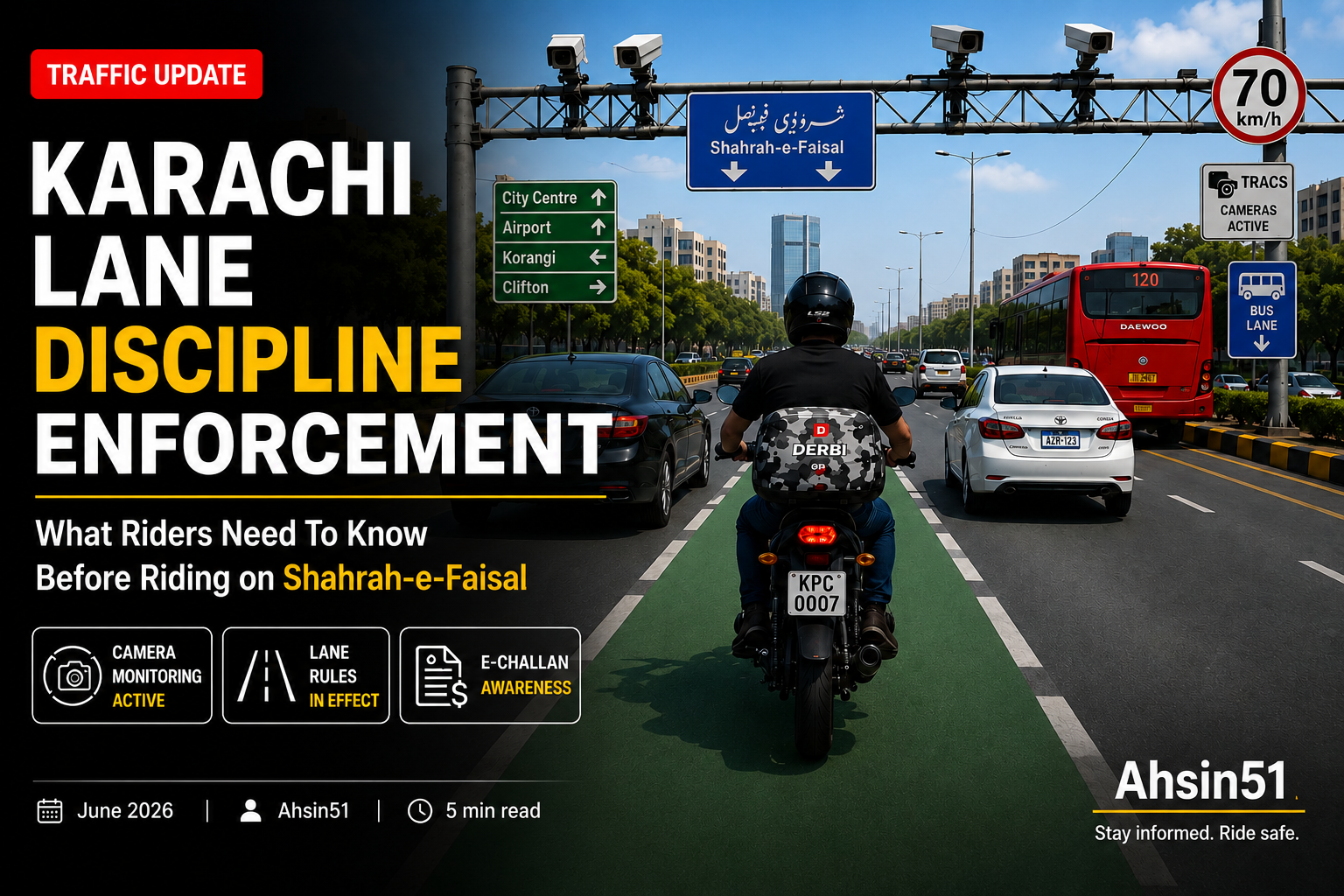
Quick Facts
Key information riders should know before using Shahrah-e-Faisal.
Cameras Active
TRACS monitoring.
Lane Monitoring
Lane usage tracked.
E-Challan
Violations recorded.
Awareness
Ride safely.
Karachi Lane Discipline Rules: What Has Changed?
Karachi Traffic Police have started lane discipline enforcement on Shahrah-e-Faisal using camera-based monitoring systems. Riders, buses and other slower-moving vehicles are expected to follow designated lanes as authorities work to improve traffic flow and road safety.
Unlike traditional enforcement, violations may be detected through monitoring systems without a traffic officer stopping the vehicle. This has increased interest among riders who regularly use Shahrah-e-Faisal for commuting between different parts of Karachi.
The purpose of this guide is to explain the lane discipline rules in simple language, help riders understand where they should ride, and reduce confusion regarding enforcement on one of Karachi’s busiest roads.
⚠ Rider Notice
Reports regarding fine amounts have varied across different sources. To avoid confusion, this article does not quote specific penalties.
Violators may receive e-challans according to applicable traffic rules and vehicle categories.
Always refer to official Karachi Traffic Police announcements for the latest enforcement information.
Understanding the 4-Lane Layout
Lane discipline enforcement requires riders and drivers to stay within the appropriate lane for their speed and vehicle type. Understanding lane positioning can help reduce violations and improve traffic flow.
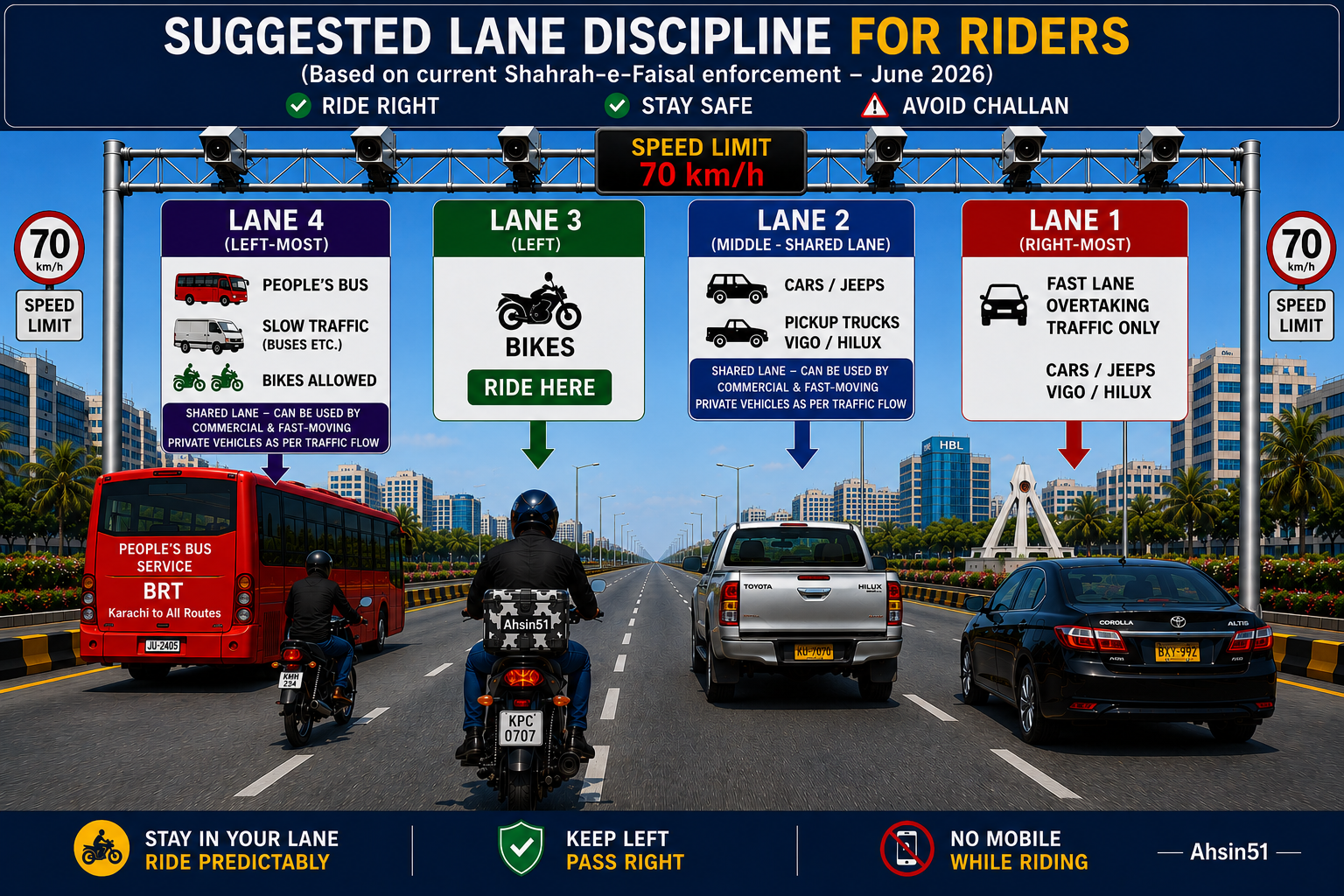
Lane 1
Fast moving traffic lane. Riders should avoid unnecessary lane occupation and always maintain awareness of surrounding vehicles.
Lane 2
General traffic lane used by vehicles maintaining steady traffic flow. Follow lane markings and avoid sudden movements.
Lane 3
Suitable for moderate-speed traffic. Riders should maintain predictable positioning and adequate following distance.
Lane 4
Typically used by slower-moving traffic and motorcycles where applicable. Always follow official lane guidance and road signs.
Understanding the 3-Lane Layout
Some sections of Shahrah-e-Faisal may effectively operate as three lanes depending on road markings and traffic flow.
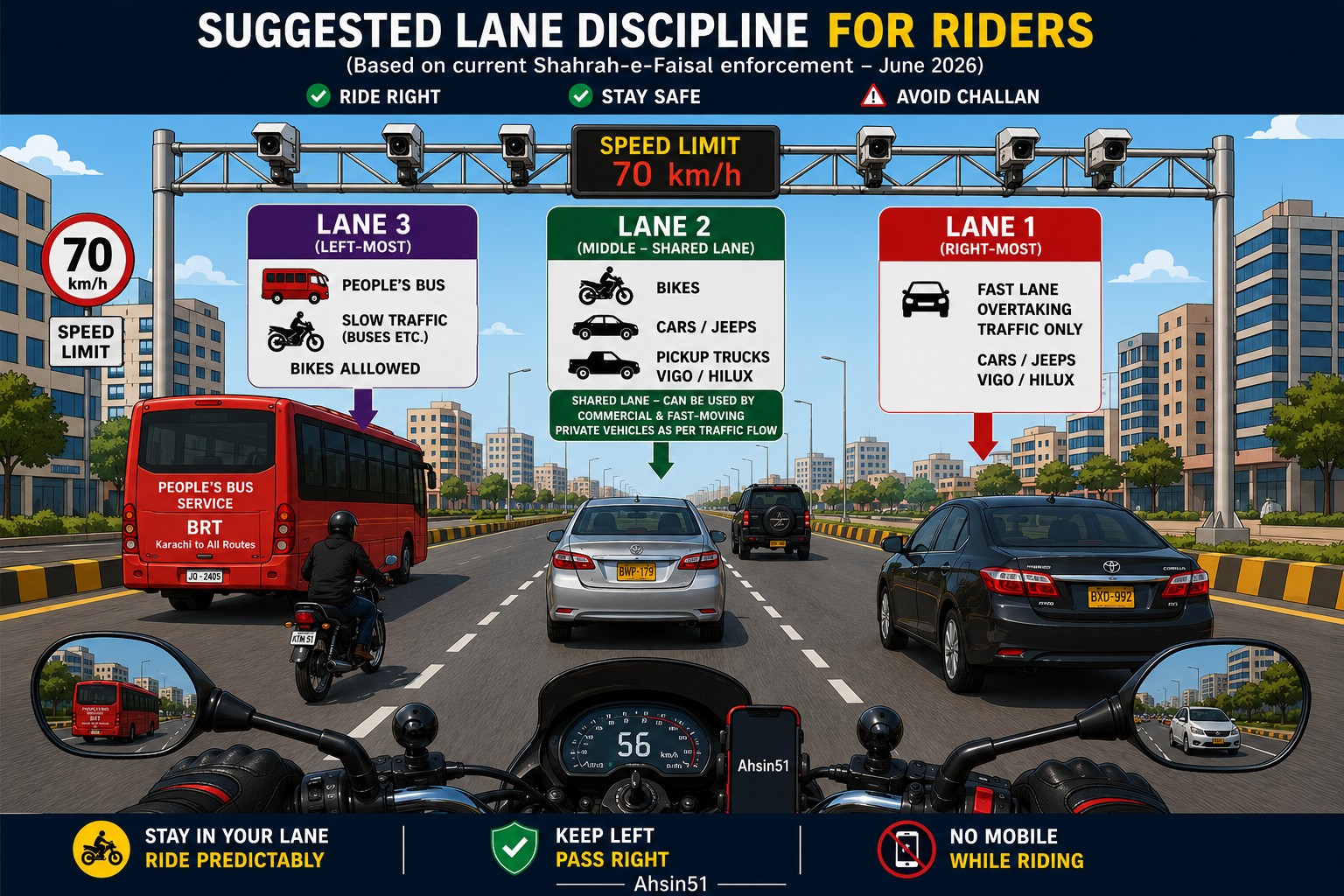
Lane 1
Fast lane used mainly for overtaking traffic.
Lane 2
Recommended position for motorcycles in normal traffic flow.
Lane 3
Buses, slower traffic and merging vehicles.
Wrong Lane vs Correct Lane Usage
A simple comparison to help riders understand lane discipline enforcement.
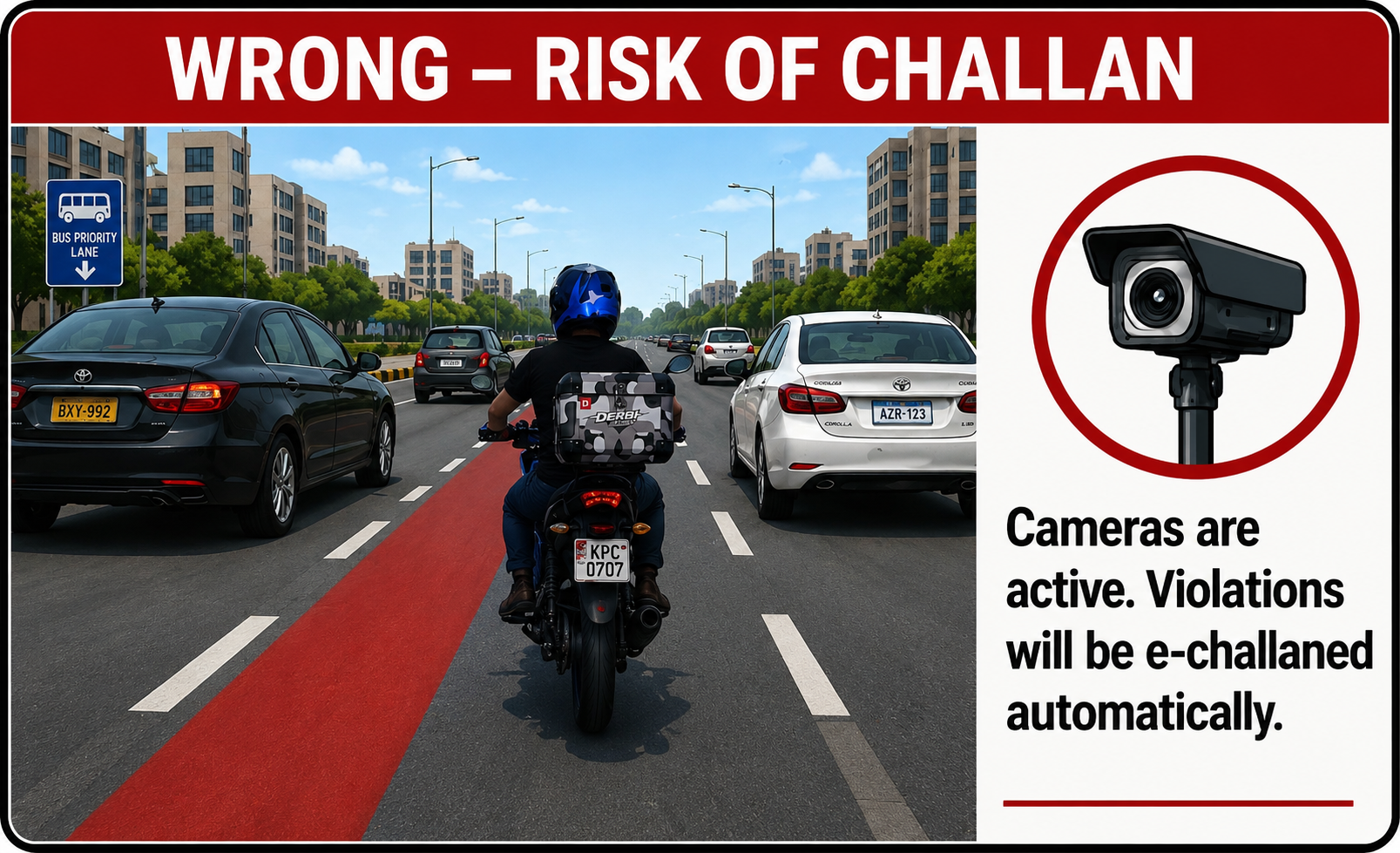
❌ Wrong Lane Usage
- Using a lane not intended for your traffic movement
- Ignoring lane discipline guidance
- May be detected through camera monitoring
- Can contribute to unsafe traffic flow
- Risk of receiving an e-challan
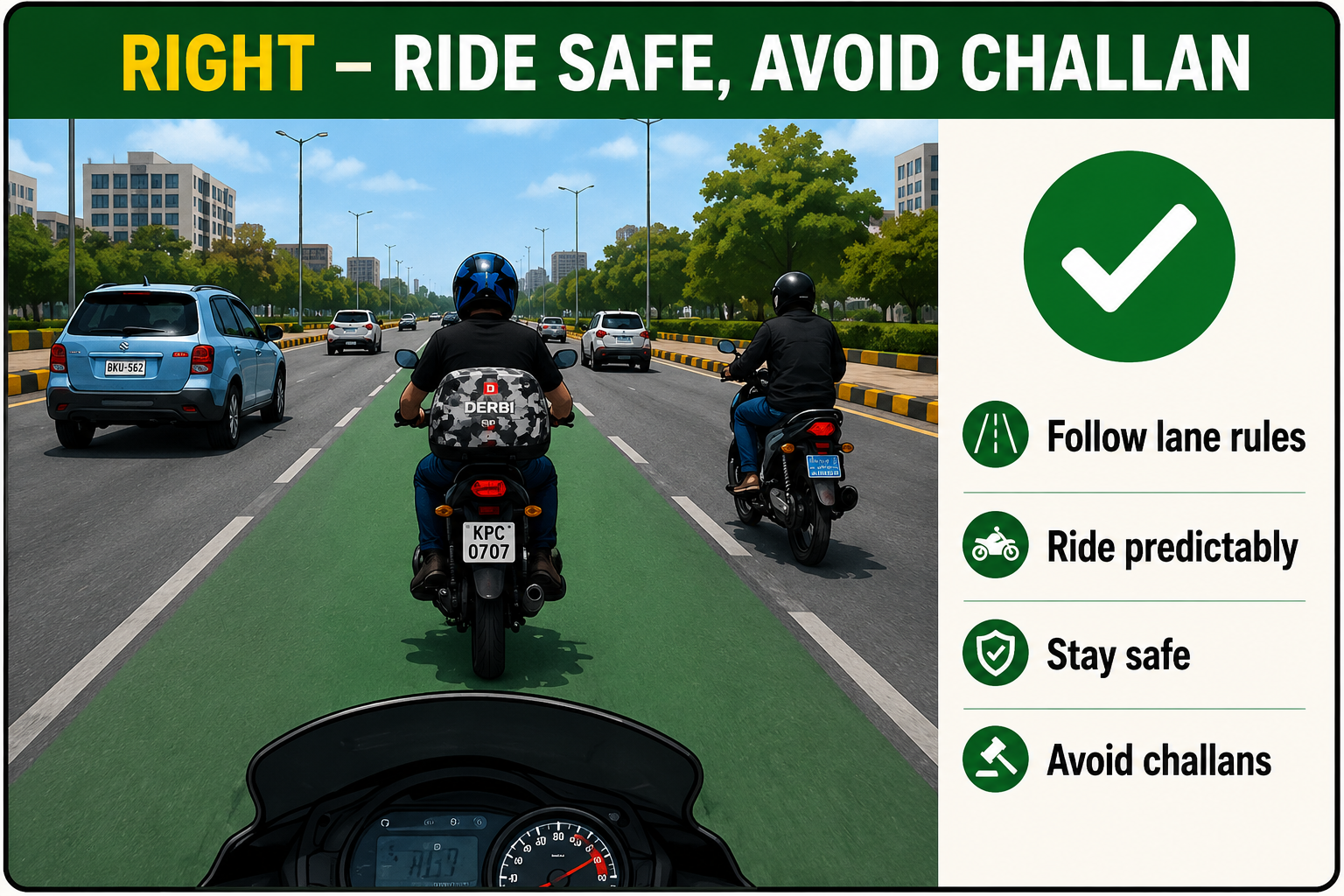
✅ Correct Lane Usage
- Follow designated lane guidance
- Ride in a predictable manner
- Maintain lane discipline
- Improve road safety for all commuters
- Reduce risk of traffic violations
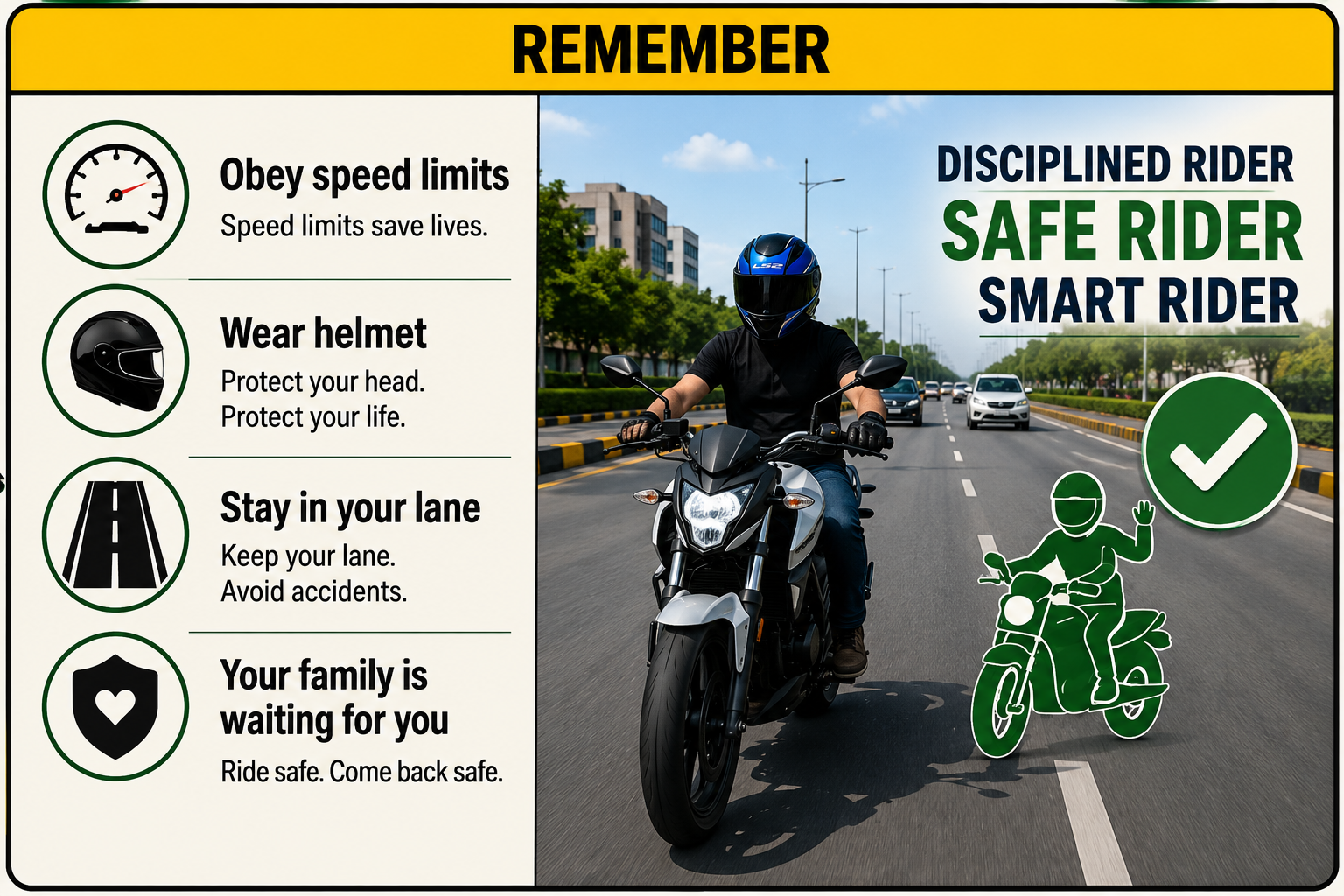
Ride Safe, Ride Smart
Lane discipline is not only about avoiding violations. It is also about improving safety for riders, passengers and other road users.
- Wear a certified helmet
- Follow speed limits
- Stay within your lane
- Maintain safe following distance
- Ride predictably and avoid sudden movements
- Stay alert in camera-monitored zones
💡 Rider Tip
Maintain a steady lane position and avoid weaving between vehicles during traffic flow. Sudden lane changes increase risk and may attract attention from monitoring systems.
Keeping a predictable riding line helps improve safety for both motorcyclists and surrounding traffic.
🧑 Note For Riders
Road conditions and lane layouts may vary across different sections of Shahrah-e-Faisal. Some stretches may appear to function as three lanes due to bus lanes, service roads or road markings.
Always follow visible traffic signs, lane markings and official instructions rather than assumptions based on previous riding habits.
Follow the road. Follow the rules. Ride safe.
❝ Ride With Ahsin51 Viewpoint ❞
Fair enforcement and rider awareness should go hand in hand. The purpose of lane discipline is not merely to issue e-challans but to encourage safer and more predictable road behaviour.
When riders understand where they belong on the road, traffic becomes smoother, lane conflicts decrease and overall road safety improves for everyone.
The objective should be safer roads, not simply avoiding challans.
— Ahsin51
Frequently Asked Questions (FAQ)
What is lane discipline?
Lane discipline means using the correct lane according to road rules, traffic flow and vehicle movement while avoiding unnecessary lane changes.
What is the difference between a lane and a line?
A lane is the space where vehicles travel, while a lane marking or line is the painted road marking that separates lanes. Riders should remain within their designated lane and avoid crossing lane markings unnecessarily.
Are motorcycles included in lane discipline enforcement?
Yes. Motorcyclists are expected to follow applicable lane rules and road markings just like other road users. Riders should stay alert to official traffic guidance and lane signage.
Which lane should motorcycles generally use?
Motorcycles should use the lane appropriate for their speed, traffic conditions and road layout. Riders should always follow official road markings, traffic signs and enforcement guidance rather than assumptions.
Can lane violations result in an e-challan?
Depending on applicable traffic rules and enforcement policies, violations may result in electronic challans being issued through the relevant enforcement system.
Can riders change lanes?
Yes. Lane changes may be necessary for overtaking, turning or avoiding hazards. Riders should change lanes safely, use proper observation and avoid sudden or aggressive movements.
Conclusion
Lane discipline enforcement on Shahrah-e-Faisal is intended to improve road safety and traffic flow. Riders should focus on staying predictable, following road markings and using the appropriate lane for prevailing traffic conditions.
Understanding lane discipline helps reduce confusion, lowers the risk of violations and contributes to safer roads for everyone. Ride responsibly, follow traffic guidance and stay within your designated lane whenever possible.